Clinical Training Sites
The University of Washington School of Medicine Psychology Internship Program provides training across several major academic medical, pediatric, cancer, behavioral health, rehabilitation, and neurodevelopmental settings in Seattle. Together, these sites provide residents with access to a broad range of patient populations, clinical services, interdisciplinary teams, faculty, and healthcare environments.
Clinical placements are determined by each resident’s training track. Residents do not rotate through all of the sites listed below. This page provides an overview of our principal clinical training sites and identifies the internship tracks that train at each location. Applicants should visit the individual Training Track pages for detailed information about specific rotations, supervisors, schedules, and training experiences.
The Psychology Internship Program is geographically distributed across several healthcare settings in Seattle but has a central administrative and educational home at UW Medical Center–Montlake. The program’s academic offices are located within the Department of Psychiatry & Behavioral Sciences on the 16th floor of UWMC–Montlake. Program-wide activities held in person, including internship orientation and in-person didactics, are generally held in this location (BB-1640).
Clinical Training Sites by Track
Each internship track has a defined set of principal clinical training settings. The table below provides a quick overview. Applicants should visit the individual Track pages for detailed descriptions of rotations, clinical activities, supervisors, and training expectations.
| Internship Track | Principal Clinical Training Sites |
|---|---|
| General Adult Psychology | UW Medical Center–Roosevelt; Harborview Medical Center’s Mental Health & Addiction Services; Fred Hutch Cancer Center |
| General Child Psychology | Seattle Children’s Hospital – hospital-based inpatient experiences (Psychiatry & Behavioral Medicine Unit, PBMU) and consultation-liaison experiences; Seattle Children’s Magnuson – outpatient psychiatry and psychology |
| Autism & Developmental Disabilities | Seattle Children’s Hospital – hospital-based inpatient experiences (Psychiatry & Behavioral Medicine Unit, PBMU) ; Seattle Children’s Magnuson – outpatient Autism Center and related services; UW Institute on Human Development and Disability (IHDD) |
| Behavioral Medicine | UW Medical Center–Montlake; Harborview Medical Center |
| Rehabilitation Neuropsychology | UW Medical Center–Montlake; Harborview Medical Center |
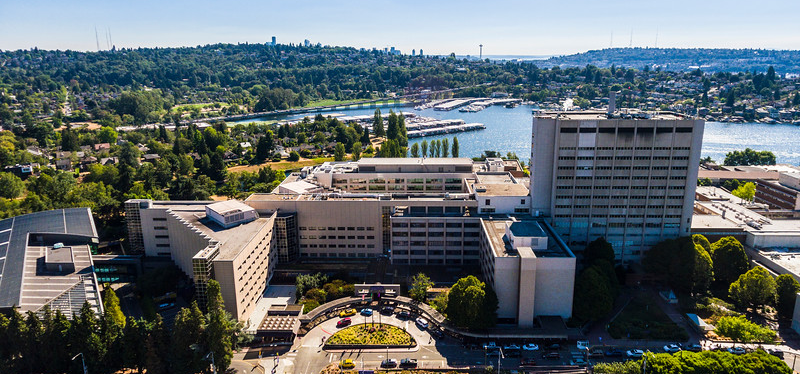
University of Washington Medical Center – Montlake
1959 NE Pacific Street, Seattle, WA 98195
Clinical Training: Behavioral Medicine and Rehabilitation Neuropsychology
Program Role: Central administrative and educational home of the Psychology Internship Program
UW Medical Center–Montlake is a major academic medical center located adjacent to the University of Washington’s main Seattle campus. As part of UW Medicine and the UW School of Medicine, UWMC–Montlake integrates specialized clinical care, education, and research within a large academic health system.
Psychology Internship Program Offices and Educational Activities
UWMC–Montlake also serves as the central administrative and educational home of the Psychology Internship Program. The program’s academic offices are located within the Department of Psychiatry & Behavioral Sciences on the 16th floor of the medical center. Program-wide activities held in person, including internship orientation and in-person didactics are located in our academic conference or classrooms.
This central location provides residents across all five internship tracks with a common program home despite completing their clinical training at different healthcare sites throughout Seattle. Residents come together for program-wide educational activities, professional development, and other internship functions, helping maintain a cohesive internship community across the program’s geographically distributed training settings.
Clinical Training at UW Medical Center–Montlake
UWMC–Montlake is also a principal clinical training site for residents in the Behavioral Medicine and Rehabilitation Neuropsychology tracks. These residents train within the Department of Rehabilitation Medicine and affiliated medical services and work with patients experiencing complex medical, neurological, rehabilitation, and behavioral health needs across inpatient, outpatient, and consultation settings.
Residents work as members of interdisciplinary healthcare teams that may include psychologists, rehabilitation physicians, neurologists, psychiatrists, nurses, physical and occupational therapists, speech-language pathologists, social workers, vocational rehabilitation counselors, and other healthcare professionals.
Patient populations may include individuals with spinal cord injury, traumatic and acquired brain injury, stroke, multiple sclerosis, neuromuscular conditions, cancer, organ transplantation, and other complex medical and neurological conditions. Rehabilitation Neuropsychology residents also receive specialized experience in neuropsychological assessment and the application of brain-behavior relationships to treatment and rehabilitation planning.
UW Medical Center – Roosevelt Outpatient Psychiatry Clinic
4225 Roosevelt Way NE, Seattle, WA 98105
Internship Track: General Adult Psychology
The UW Medical Center–Roosevelt Psychiatry Clinic is an academic outpatient psychiatry and psychology setting located near the University of Washington campus and UW Medical Center–Montlake. The clinic provides interdisciplinary outpatient mental health care and serves as one of the principal training settings for residents in the General Adult Psychology Track.
Psychology residents provide evidence-based assessment and psychotherapy to adults presenting with a broad range of psychiatric, psychological, and behavioral health concerns. Training emphasizes development of advanced psychotherapy skills, case conceptualization, evidence-based intervention, interdisciplinary collaboration, and increasing clinical independence under faculty supervision.
The clinic provides residents with access to the broader clinical, educational, and research environment of the UW Department of Psychiatry & Behavioral Sciences and the UW School of Medicine. Psychology and psychiatry faculty and trainees work collaboratively, providing residents with experience functioning as psychologists within an academic outpatient mental health setting.
Harborview Medical Center
325 9th Avenue, Seattle, WA 98104
Internship Tracks: General Adult Psychology, Behavioral Medicine, and Rehabilitation Neuropsychology
Harborview Medical Center is a major UW Medicine teaching hospital located in Seattle’s First Hill neighborhood. Owned by King County and managed by UW Medicine, Harborview has a distinctive public-service and safety-net mission. The medical center serves patients from throughout King County and the Pacific Northwest and is Washington’s Level I adult and pediatric trauma and burn referral center.
Harborview provides psychology residents with experience working with patients from a wide range of cultural, socioeconomic, medical, psychiatric, and psychosocial backgrounds. Its combination of acute medical care, trauma services, rehabilitation, behavioral health, and specialty outpatient services creates extensive opportunities for interdisciplinary training.
General Adult Psychology
General Adult Psychology residents train in the Harborview Outpatient Psychiatry/Psychology Clinic (5 East Clinic). The clinic provides outpatient psychological assessment and evidence-based psychotherapy to adults with a broad range of mental health concerns. Residents also benefit from referrals and collaboration with Harborview’s specialty behavioral health, medical, neurological, sleep, and other clinical services.
Behavioral Medicine
Behavioral Medicine residents may train across inpatient rehabilitation, consultation-liaison, burn and rehabilitation services, the Comprehensive Outpatient Rehabilitation Program (CORP), Madison Clinic, and other specialty medical and behavioral health services. These experiences emphasize psychological assessment and intervention within interdisciplinary medical and rehabilitation settings.
Rehabilitation Neuropsychology
Rehabilitation Neuropsychology residents receive neuropsychological and rehabilitation training involving patients with traumatic and acquired brain injuries, stroke, neurological disease, complex medical conditions, and other conditions affecting cognition, behavior, and functioning.
- Harborview Medical Center
- General Adult Psychology Track
- Behavioral Medicine Track
- Rehabilitation Neuropsychology Track
Fred Hutch Cancer Center
Sloan Clinic, 1354 Aloha Street, Seattle, WA 98109
Internship Track: General Adult Psychology
Fred Hutch Cancer Center is an internationally recognized cancer treatment and research center located in Seattle’s South Lake Union neighborhood. Its clinical and research environment brings together cancer care, supportive care, clinical research, and translational science within an academic healthcare setting.
General Adult Psychology residents placed with Psychiatry and Psychology Services receive specialized training in psycho-oncology and behavioral medicine within an interdisciplinary cancer-care environment. Residents provide psychological assessment and evidence-based psychotherapy to adults coping with cancer and its treatment, survivorship, serious illness, psychiatric symptoms, adjustment concerns, and related behavioral health needs.
Residents work alongside psychologists, psychiatrists, oncologists, advanced practice providers, nurses, social workers, and other members of multidisciplinary cancer-care teams. The setting provides residents with experience integrating psychological assessment and intervention into the care of patients with complex medical conditions.
Seattle Children’s Hospital
4800 Sand Point Way NE, Seattle, WA 98105
Internship Tracks: General Child Psychology and Autism & Developmental Disabilities
Seattle Children’s Hospital is a major pediatric academic medical center affiliated with the University of Washington School of Medicine. Seattle Children’s provides inpatient, emergency, specialty medical, and behavioral health services to children and adolescents from throughout Washington and the broader region.
The main Seattle Children’s Hospital campus provides hospital-based training experiences for residents in the General Child Psychology and Autism & Developmental Disabilities tracks. Outpatient psychiatry, psychology, and autism training for these tracks primarily occurs nearby at Seattle Children’s Magnuson, described below.
General Child Psychology
General Child Psychology residents receive hospital-based training that includes the Psychiatry and Behavioral Medicine Unit (PBMU) and pediatric Consultation-Liaison services. These experiences provide opportunities for assessment, crisis intervention, evidence-based treatment, behavioral intervention, consultation, and interdisciplinary care for children and adolescents with complex psychiatric, behavioral, developmental, and medical needs.
Autism & Developmental Disabilities
Autism & Developmental Disabilities residents also receive hospital-based training at Seattle Children’s, including experience with children and adolescents with autism, intellectual and developmental disabilities, and complex co-occurring psychiatric, medical, or behavioral concerns.
Residents work within multidisciplinary pediatric teams that may include psychologists, psychiatrists, pediatricians, nurses, social workers, behavior analysts, therapists, educators, and other healthcare professionals.
- Seattle Children’s Hospital
- General Child Psychology Track
- Autism & Developmental Disabilities Track
Seattle Children’s Magnuson
6901 Sand Point Way NE, Seattle, WA 98115
Internship Tracks: General Child Psychology and Autism & Developmental Disabilities
Seattle Children’s Magnuson is a major outpatient behavioral health and neurodevelopmental clinical setting located approximately 1.5 miles north of the main Seattle Children’s Hospital campus. The facility brings together outpatient Psychiatry and Behavioral Medicine and the Seattle Children’s Autism Center, creating a multidisciplinary environment dedicated to the behavioral, emotional, and developmental health of children and adolescents.
Magnuson serves as a principal outpatient training location for residents in both the General Child Psychology and Autism & Developmental Disabilities tracks. The co-location of outpatient psychiatry, psychology, behavioral health, and autism services provides residents with opportunities for interdisciplinary collaboration across programs while developing specialized skills within their respective tracks.
General Child Psychology
General Child Psychology residents receive outpatient training through Seattle Children’s Psychiatry and Behavioral Medicine programs at Magnuson. Residents work with children, adolescents, and families presenting with a broad range of emotional, behavioral, and psychiatric concerns and develop advanced skills in evidence-based psychological assessment, case conceptualization, psychotherapy, parent-focused intervention, and interdisciplinary care.
Seattle Children’s outpatient behavioral health programs provide specialized services for concerns that may include anxiety and mood disorders, disruptive behavior, attention and regulation difficulties, obsessive-compulsive and related disorders, psychosis, and other complex child and adolescent mental health concerns. Specific clinical experiences are determined by the resident’s individualized training plan and current program offerings.
Autism & Developmental Disabilities
Magnuson is also home to the Seattle Children’s Autism Center, a specialized interdisciplinary clinical, research, outreach, and training setting serving children and adolescents with autism and related neurodevelopmental conditions.
Autism & Developmental Disabilities residents receive intensive outpatient experience in assessment and treatment. Depending on the resident’s individualized training plan, experiences may include autism diagnostic evaluation, treatment of mood and anxiety concerns, parent-focused behavioral intervention, neurodevelopmental assessment, intensive behavioral programming, early intervention, and other specialty services.
The setting provides residents in both tracks with opportunities to work alongside psychologists, psychiatrists, behavior analysts, advanced practice providers, therapists, family advocates, and other professionals specializing in pediatric behavioral health and neurodevelopmental care.
- Seattle Children’s Magnuson – Location and Directions
- Seattle Children’s Psychiatry and Behavioral Medicine
- Seattle Children’s Autism Center
- General Child Psychology Track
- Autism & Developmental Disabilities Track
UW Institute on Human Development and Disability (IHDD)
1701 NE Columbia Road, Seattle, WA 98195
Internship Track: Autism & Developmental Disabilities
The University of Washington Institute on Human Development and Disability (IHDD) is an interdisciplinary academic, clinical, research, and training center located adjacent to UW Medical Center–Montlake. Its clinical programs provide interdisciplinary assessment and services for children with or at risk for neurodevelopmental disabilities.
Autism & Developmental Disabilities residents participate in interdisciplinary developmental assessment through specialty clinics that may include the Child Development Clinic, Down Syndrome Specialty Clinic, Infant Development Follow-Up Clinic, and Cardiac Neurodevelopmental Clinic.
Residents work alongside professionals from psychology, developmental pediatrics, audiology, speech-language pathology, occupational and physical therapy, nutrition, social work, family advocacy, and other disciplines. This interdisciplinary model provides residents with experience integrating psychological assessment with information from multiple healthcare and developmental specialties.
Residents also participate in the University of Washington’s Leadership Education in Neurodevelopmental and Related Disabilities (LEND) program. LEND provides interdisciplinary education, leadership development, advocacy experiences, and opportunities to learn alongside trainees and professionals from multiple disciplines.
This combination of clinical assessment, interdisciplinary training, leadership education, and access to an active university research environment makes IHDD a distinctive component of the Autism & Developmental Disabilities Track.
Our Program Home
Although clinical training occurs across multiple healthcare settings, UW Medical Center–Montlake serves as the central administrative and educational home of the Psychology Internship Program. The program’s academic offices are located within the Department of Psychiatry & Behavioral Sciences on the 16th floor of UWMC–Montlake. Internship orientation and program-wide didactics held in person generally take place in BB-1640.
This structure allows residents to benefit from the breadth of a geographically distributed academic health psychology internship while maintaining a shared program identity and opportunities for regular interaction with residents and faculty across all five training tracks.
Explore Our Training Tracks
- General Adult Psychology Track
- General Child Psychology Track
- Autism & Developmental Disabilities Track
- Behavioral Medicine Track
- Rehabilitation Neuropsychology Track
Getting Between Training Sites: Transportation & U-PASS
Because the Psychology Internship Program includes training opportunities across several major healthcare settings in the greater Seattle area, residents should expect to travel between program and clinical locations during the internship year. The program and University provide several resources to make this travel easier and to minimize transportation costs.
All psychology residents receive a fully subsidized UW U-PASS as part of their employment. The U-PASS provides unlimited travel on regional public transportation, including King County Metro and other regional bus systems, Sound Transit buses, Link light rail, Sounder commuter rail, Seattle Streetcar, and several additional transit services. Link light rail and the regional transit network provide connections throughout Seattle and the surrounding region, giving residents considerable flexibility in choosing where to live and how to commute to their primary training sites.
Residents also have access to a network of fare-free UW and healthcare shuttle services connecting many of our major training locations. The UW Health Sciences Express provides weekday transportation between UW Medical Center–Montlake and Harborview Medical Center, with additional stops at UW Tower and Roosevelt. Other UW/Fred Hutch shuttle routes provide connections among UW Medical Center–Montlake, South Lake Union, Fred Hutchinson Cancer Center, and Harborview. Shuttle routes and schedules vary, so residents are encouraged to consult current schedules when planning travel between sites.
Because parking at Seattle-area medical centers and clinics can be limited and expensive, the internship program generally does not provide or reimburse routine parking at clinical training sites. Residents who choose to drive should therefore anticipate responsibility for applicable parking expenses unless a particular training site makes other arrangements.
We encourage residents to use public transportation, UW and healthcare shuttles, walking, or bicycling whenever practical. Seattle’s extensive bus and light rail network, together with the UW shuttle system and the resident’s U-PASS, makes it possible for many residents to commute to training without relying on a personal vehicle.
Transportation options will vary somewhat depending on a resident’s track, clinical placement, home location, and daily schedule. Residents are encouraged to consider access to public transportation when choosing housing and to become familiar with the transportation options serving their primary clinical sites before the beginning of the training year.
Transportation Resources:
UW U-PASS | UW Health Sciences & Medical Center Shuttles | Fred Hutch Transportation & Shuttle Service